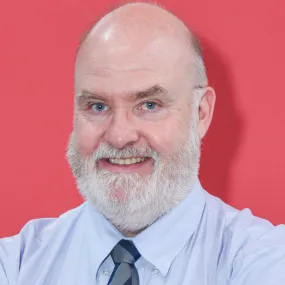
Dr. Chris JONES
Environment and Sustainability Manager, Edwards
Chris Jones graduated from Imperial College London with a BSc and PhD in Chemistry before spending 17 years with the UK Atomic Energy Authority, addressing environmental and waste management challenges across nuclear, defence, and industrial sectors. Since joining Edwards in 2003, he has focused on environmental technologies supporting semiconductor manufacturing, including vacuum, abatement, water treatment, and integrated subfab systems.
As Environment and Sustainability Manager at Edwards, Chris works on sustainability challenges across the semiconductor value chain. His activities span greenhouse gas abatement, PFAS and multi-pollutant air management, energy and utility optimisation, predictive maintenance, lifecycle carbon modelling (Scope 1–3), and resource recovery initiatives, collaborating with industry groups to advance responsible semiconductor manufacturing.
Presentation Title
Sustainability in Fabs – A System-Level View from an Integrated Process Support Supplier
As semiconductor manufacturing expands both Globally and across Southeast Asia, sustainability is frequently discussed through the lens of greenhouse gas reduction. While Scope 1 climate emissions remain critical, modern fabrication facilities operate within a far broader environmental and regulatory landscape encompassing, amongst other topics, air quality, hazardous air pollutants, volatile organic compounds, PFAS, water discharge, occupational safety, and permitting constraints.
This presentation offers a system-level perspective from an integrated process support supplier working across vacuum, abatement, utilities, monitoring, and service operations.
It explores how emissions management must balance climate performance with health, compliance, reliability, and total cost of ownership. The talk highlights how interconnected decisions — from process tool configuration to subfab infrastructure and facility systems — influence energy use, pollutant control, and operational resilience.
Practical examples are presented, including AI-enabled predictive maintenance systems, optimisation of abatement technologies, atmospheric monitoring collaborations, and resource recovery initiatives. These case studies demonstrate how engineering-led improvements can simultaneously enhance yield, reduce energy intensity, lower emissions, and strengthen regulatory compliance.
The session concludes by outlining a framework for sustainable fab operation that recognises carbon reduction as essential, but not sufficient — and positions environmental performance as an engineered, system-wide responsibility across tools, subfab, utilities, and service ecosystems.
Back to Sustainability Summit: Energy & Emission | Efficiency | Regulatory